August 31, 2026
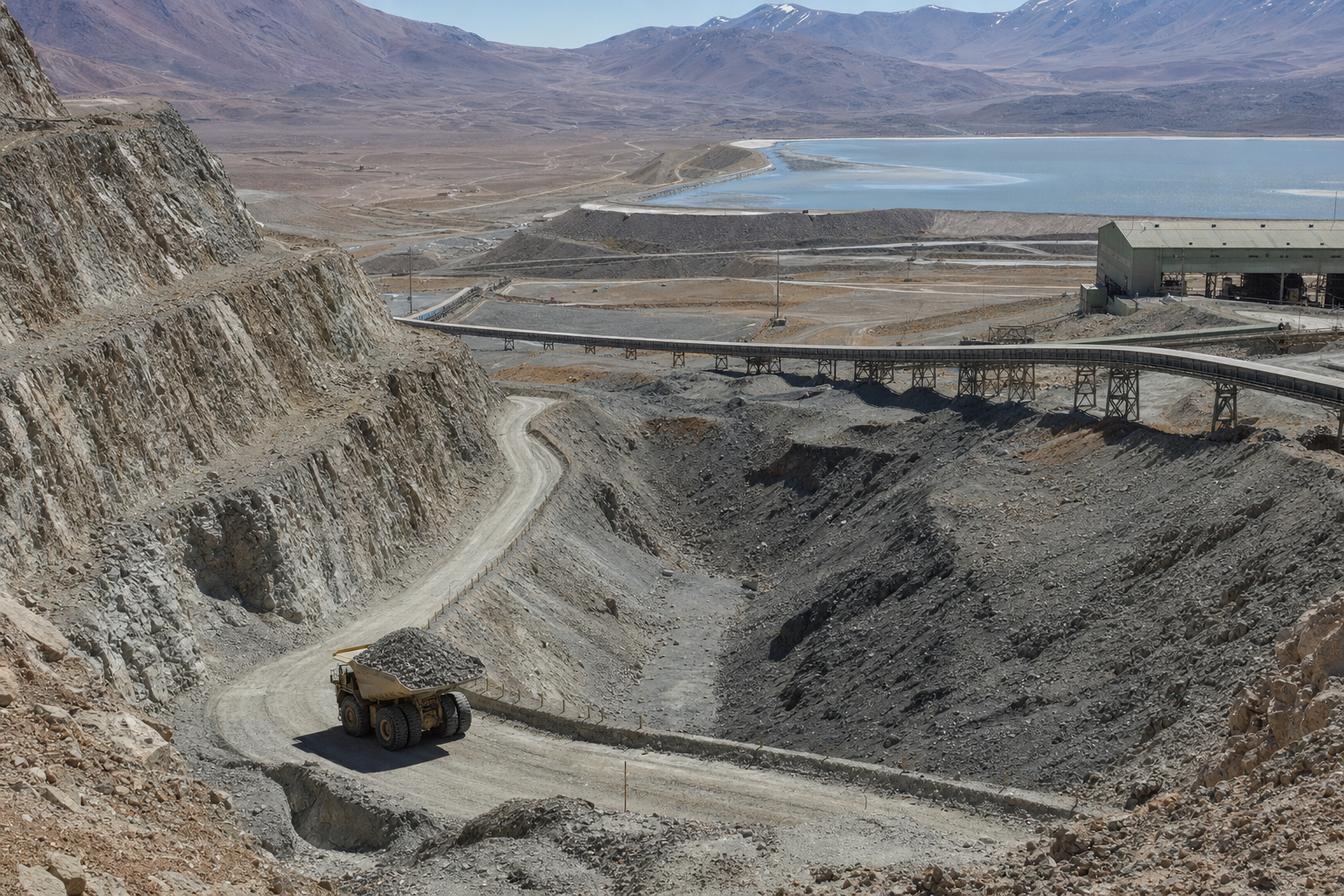
Talks among Glencore, Anglo American and Teck over neighboring copper mines in Chile have become a focal point for how value is allocated across three of the sector’s largest operators. At stake is a potential $1.4 billion prize tied to how these assets are configured and run, with outcomes that could influence ownership, capital deployment and multi‑year mine planning.
Strategic Options Around Adjacent Assets
Adjacent copper mines often present a menu of industrial choices that can change project economics. Depending on geology and infrastructure layouts, operators in similar situations have used joint‑venture realignments, boundary adjustments, ore‑tolling and blending agreements, or shared-use arrangements for concentrators, tailings, water and power. The intent is typically to reduce duplicated capital, raise throughput or recoveries, and sequence ore bodies more efficiently across a combined footprint.
Within that framework, the three companies are engaged in negotiations that will determine how potential gains are realized and apportioned. Any change in the operating perimeter or processing pathways can shift cost curves, mine lives and sustaining capex profiles. For majors, these choices flow through to portfolio balance between brownfield optimization and new-build commitments, with implications for future investment pacing in Chile and elsewhere.
What The Value Could Represent
The reference to $1.4 billion underscores how material adjacency decisions can be when concentrated around high‑tonnage, long‑life copper systems. In comparable situations, value typically emerges from debottlenecking shared circuits, aligning cut‑off grades to processing capacity, improving metallurgical blending, or consolidating logistics. Realizing such gains often hinges on governance clarity and access terms that match orebody characteristics to plant capabilities at the lowest integrated cost.
While the negotiations remain focused on Chilean mines situated side by side, the financial and operating stakes extend beyond a single district. The final structure will set baselines for each company’s forward plans, affecting cash cost guidance, sustaining capital schedules and potential brownfield expansions. It may also inform how each party approaches adjacent‑asset discussions in other jurisdictions.
Copper Market Context
Chile remains the world’s largest copper supplier, and the configuration of major assets there is closely watched by the market. Sector‑wide, operators are managing tighter project pipelines, inflationary input costs and environmental constraints alongside structural demand tied to electrification. In that environment, high‑certainty incremental tonnes from existing districts can be as consequential as greenfield additions, particularly when they come with lower unit costs and clearer permitting pathways.
However the talks conclude, the outcome is likely to be read through the lens of capital efficiency and supply reliability from one of copper’s core regions. For precious‑metals holders, decisions around large copper complexes also matter because a significant share of global silver supply is produced as a by‑product of copper mining.