October 14, 2026
Forecasts Up, But Policy Is the Swing Factor
Copper price forecasts for 2026 have been lifted, but the path to that outlook remains conditioned by US tariff decisions that could reshape trade flows into the new year. Macquarie frames a spectrum of outcomes anchored by Washington’s stance: a clean ruling-out of tariffs—what it describes as the “collapse” scenario—is possible but assessed as the least likely pathway at this stage. The bank’s more probable case is a period of limbo extending beyond January 1, during which roughly 1.5 million tonnes of copper in the United States would stay exactly where it is.
That framing leaves the market balancing improved medium-term pricing expectations against near-term policy opacity. For producers, traders, and manufacturers, the distinction between a definitive policy reset and an extended holding pattern is material: the former would remove a key overhang on international movements of metal, while the latter implies continued segmentation between domestic and external markets.
Tariff Scenarios and Physical Flows
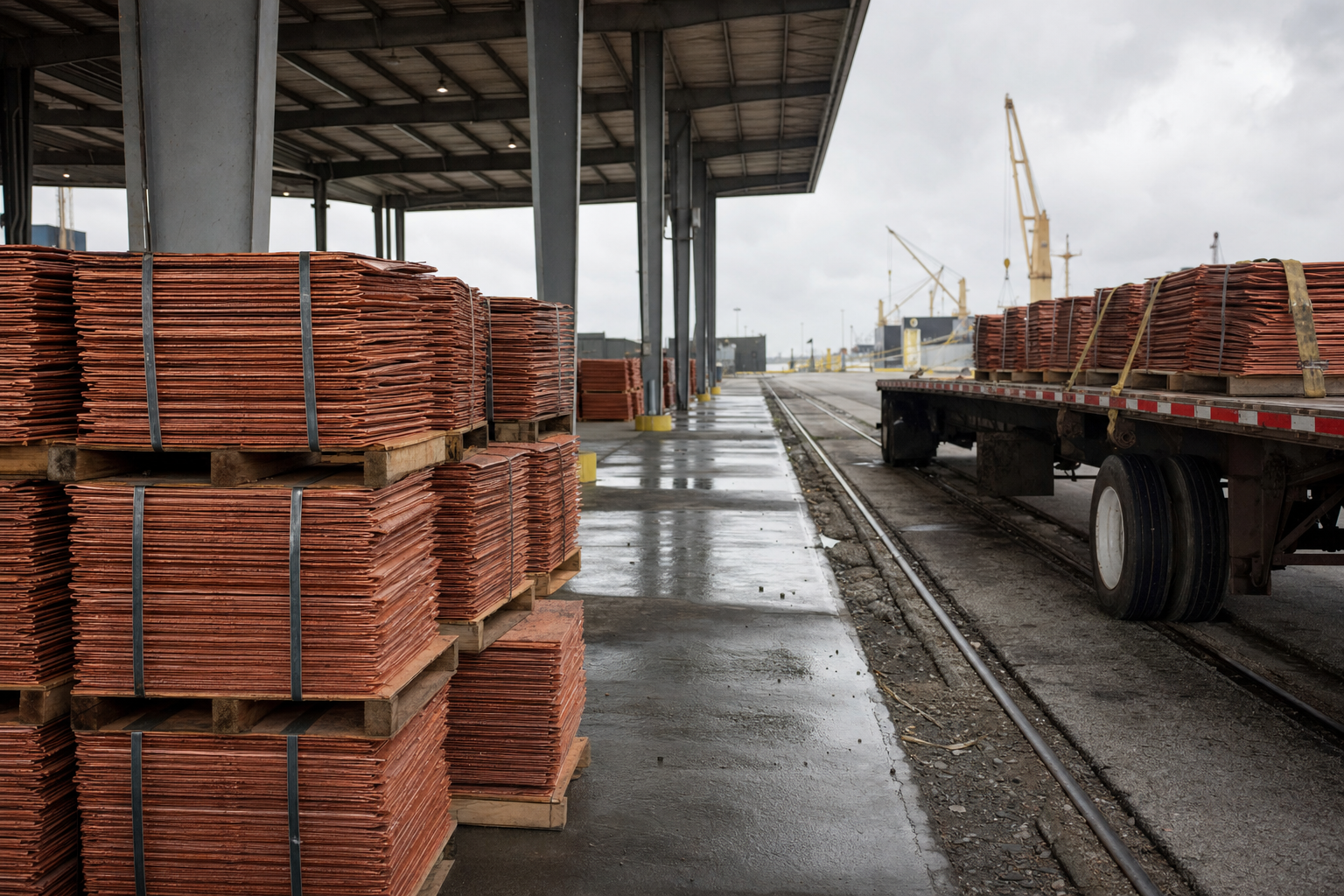
Under the least-likely “collapse” scenario, a clear decision to rule out tariffs would simplify cross‑border transactions, reduce administrative friction, and allow supply chains to normalize. In contrast, an extended limbo would keep the status quo in place after January 1. Macquarie’s baseline envisions about 1.5 million tonnes of US copper remaining in situ, effectively locking a significant volume within the domestic system rather than circulating through global channels.
Practically, that would sustain current trade patterns and keep attention on regional balances, logistics capacity, and location premia. Market participants would continue to calibrate procurement and inventory strategies around what remains a policy-driven constraint on mobility. Any eventual policy clarity—either extension, modification, or removal—would become the catalyst for re‑routing physical flows.
Market Implications
With 2026 forecasts moving higher, the medium-term narrative points to firmer fundamentals; however, the near-term lens is still dominated by policy risk. The degree to which US-held copper can or cannot move will influence availability for international consumers, the tightness of non‑US markets, and pricing relationships between delivery points. Until there is a definitive decision in Washington, the market’s reference points remain scenario-based rather than rule-based.
For holders and users of physical metal, the takeaway is straightforward: tariff outcomes chiefly affect cross‑border logistics, location premia, and the timing of material flows, not the underlying title to allocated inventory held in secure storage.