
October 17, 2026
Precious Metals Slide on Inflation Surprise
Gold and silver fell sharply in late U.S. trading on Wednesday as a hotter‑than‑expected U.S. consumer inflation print pushed interest rate expectations higher and strengthened the dollar. At the time of writing, spot gold traded near $4,098.80 per ounce, down $61.30, or 1.47%. Spot silver was near $55.410, down $3.640, or 6.16%.
Selling accelerated across the precious‑metals complex into the afternoon as rates rose and the U.S. currency firmed. Silver bore the brunt of the move, consistent with its higher volatility and dual precious‑and‑industrial profile. Gold’s decline was comparatively contained but sufficient to pull the metal below the $4,100 mark.
Rates, Dollar and Cross‑Asset Moves
The inflation surprise lifted U.S. Treasury yields and supported the dollar, tightening financial conditions into the close. Higher real and nominal yields increase the opportunity cost of holding non‑yielding assets, a dynamic that typically weighs on bullion prices when rate expectations shift hawkishly. The firmer dollar also raises the effective cost of dollar‑denominated metals for non‑U.S. buyers, adding an additional headwind.
Risk assets were broadly weaker. North American equities closed sharply lower as investors repriced the interest‑rate path and growth outlook following the data. The combination of higher yields, a stronger dollar and softer risk sentiment set a challenging backdrop for metals through the session.
Market Context
Today’s move reinforced recent sensitivities within the complex: gold exhibiting relative resilience as a monetary hedge, silver amplifying directional shifts given its larger industrial linkages and thinner liquidity at the margin. Price action was order‑driven into the afternoon, with losses extending as the broader metals space came under pressure alongside rising policy‑tightening expectations.
While the session’s focus was firmly on U.S. macro inputs, the underlying drivers were straightforward: a hotter inflation print, a higher policy‑rate path being discounted, and a translation into stronger yields and a firmer dollar. In that environment, precious metals typically require either a countervailing risk‑aversion bid or a softer rates profile to stabilize.
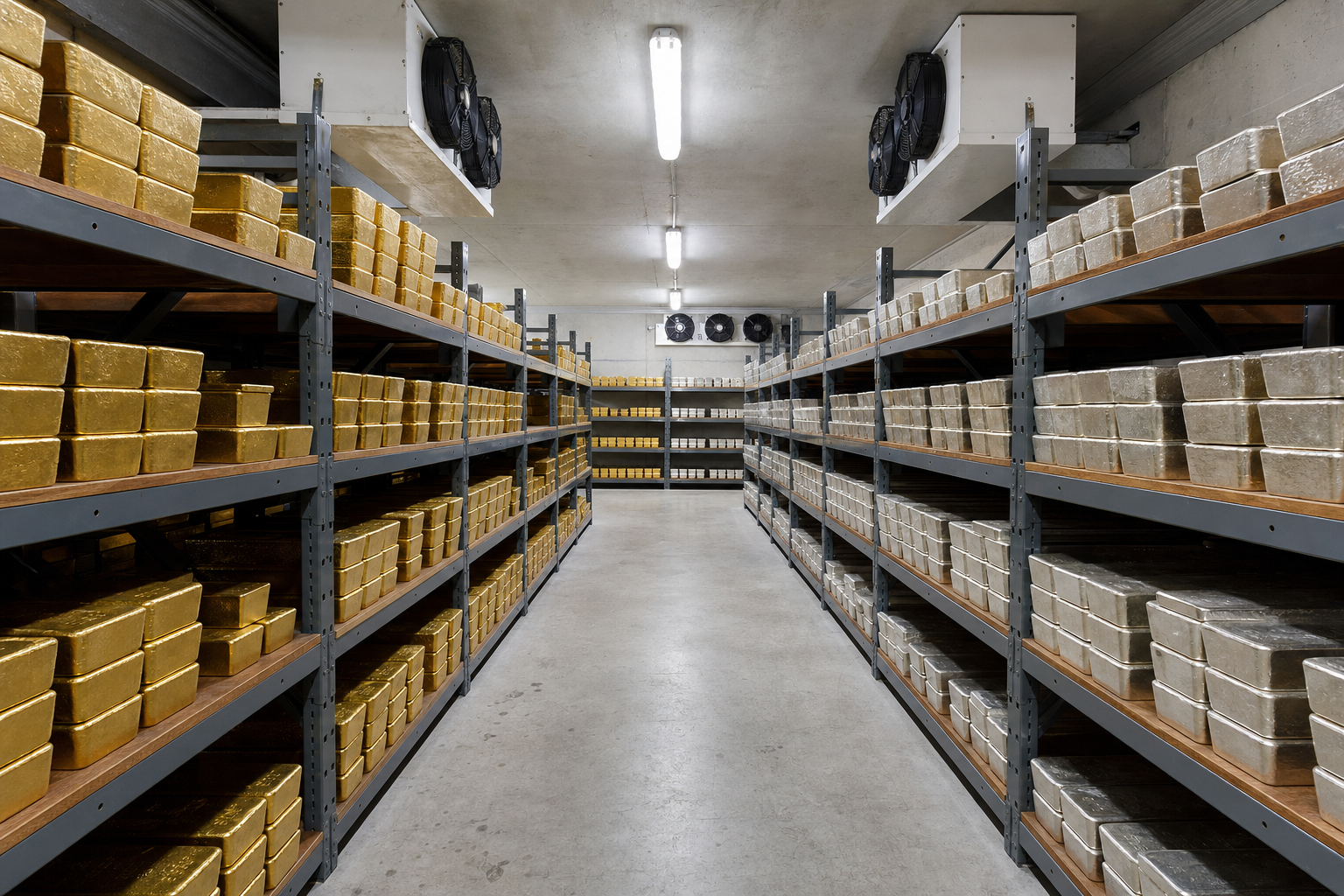
Allocated, physically vaulted bullion provides direct ownership exposure to metal independent of credit or derivative structures.


